
thriller-books-for-fiction-readers
Thriller Books for Fiction Readers :
Why Another Feg Keeps You Turning Pages
What makes a thriller work is not the genre label. It is the sense that the person at the centre of the story is in real danger and that the outcome is not guaranteed. That the next chapter could go either way.
Another Feg has that quality running through it from beginning to end, not because it was constructed to, but because Jim Green’s life actually contained it.
He was shot at twice. Attacked by two separate gangs. He worked offshore in the North and Irish Seas in conditions where saving lives was part of the job description and failure was not abstract. He was drawn into security work that brought him close to organised crime, not for the first time, as he notes in the introduction, with the particular calm of someone for whom that fact no longer surprises him. He went bankrupt and had to leave Scotland entirely, moving to a farm in Denmark to rebuild from nothing.
None of those things were written to create tension. They happened. Jim Green recorded them with the same directness he brings to every other part of his life, the coal fires and the shopping lists and the school milk, because in Another Feg nothing gets more weight than it actually carried at the time.
Readers who pick up thrillers for the feeling of a life under pressure, where the next page genuinely matters, will find that feeling here. With the added quality that no one invented any of it.

The Incidents That Read Like Fiction
There are moments in Another Feg that a thriller writer would be glad to have in their back catalogue.
The night Jimmy Green is ambushed outside his own front door by four men, the father and brothers of a neighbour with a grudge, is one. Jim’s father was the regimental boxing champion for the Argyll and Sutherland Highlanders. They brought four men anyway. By the time young Jim is sent out through the ground floor window to run to Uncle Sammy’s house, his father is already unconscious inside a neighbour’s flat.
What follows, Sammy pulling a fence post from a garden, covering the ground to Killoch Avenue without slowing, going through the window rather than the door, is written in under a page. It does not need more than that.
Then there are the offshore emergencies, described in the blunt language of someone who was trained to respond to them. The security work and the organised crime that came with it, brushed against more than once across different chapters and different decades. The bankruptcy that ended not with recovery in the conventional sense but with a one-way trip to a farm in Denmark and the long, unglamorous business of starting again.
Jim Green lived a life where the stakes were frequently real. He writes about all of it the same way, directly, specifically, without inflation, which is precisely what makes it land.

Fantasy Novels for Story Readers: The World Inside Another Feg
The word fantasy, in its oldest sense, simply means a world the reader cannot access any other way. A place so different from the one they are sitting in that the act of reading it feels like genuine transport.
By that measure, Ferguslie Park in 1954 qualifies.
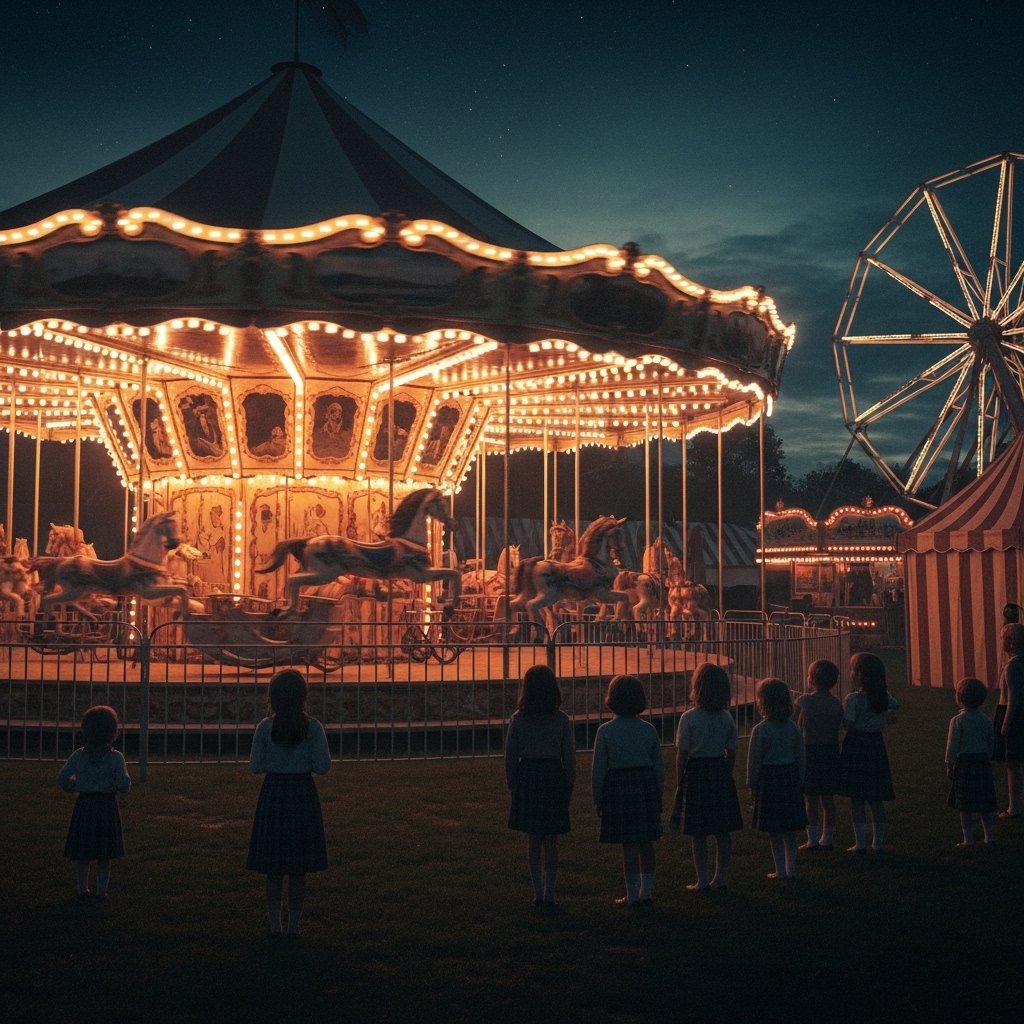
The Shows arriving in Paisley, Cardona’s funfair setting up at St James’s Park, the waltzers and dive bombers and ghost train, the smell of candy apples and diesel engines and the air pistons firing. Jim Green, aged four, watching all of it for the first time and being completely undone by it.
The circus that came through the streets with real elephants and tigers and lions, the crowd lining the pavements, Coco the clown drawing the children in. Jim’s father taking him to the show, the ringmaster cracking his whip in a long red coat and black top hat, the high wire acts and the exotic women in fishnet stockings. The walk home with Jim on his father’s shoulders, a collie backie, his face in his father’s thick black curls, the smell of his hair all the way back to Killoch Avenue.
That is not a world that exists anymore. Jim Green is one of the people who still remembers what it felt like to be inside it, and he writes it with enough precision that the reader can smell the canvas tent and the new hay bales.
For readers who turn to fiction and fantasy for the experience of being put somewhere entirely new, Another Feg delivers that. It just happens to be somewhere that was real.

The Life After Feegie That Nobody Predicted
The Ferguslie Park that Jim Green grew up in was a place other people wrote off. The social stigma he mentions in his introduction was not abstract, it followed people out of the scheme and into job interviews, into landlords’ offices, into every room where a first impression was being formed.
Jim walked into those rooms anyway.
He went to university. He lectured there. He earned an MBA and built a business that, at its height, put him in the company of politicians, celebrities and senior figures across two sides of the political spectrum. He visited No. 10 Downing Street. He attended the Queen’s Garden Parties. He served as election agent and coordinator for Ken Busby, Scottish Parliament Presiding Officer, and Jim Maxton, former Secretary of State for Scotland under Tony Blair and Gordon Brown.
He also sponsored the Green Prize at the Adam Smith Business School at the University of Glasgow, financial support for students working on economic sustainability projects, and attended University of Glasgow Racing’s Formula EV car launch. He spent £5,000 in a single afternoon buying laptops and iPads for his grandchildren’s education.
None of that trajectory was available to a boy in a damp attic room in Abercorn Street in 1951. Jim Green covered that distance himself, across decades, without losing the thread back to where he started. That is not a story that fiction could have credibly invented. It is too large and too specific and too unlikely.
Which is exactly why it needed to be written down.
What Elaine Means to the Book
Every memoir has a centre of gravity. In Another Feg it is Elaine.
Jim Green mentions her in the introduction in one sentence that does more work than most writers manage in a paragraph. He calls her the love of his life and his compass. In a book that covers bankruptcy, near-death offshore, gang attacks, organised crime and a heart attack, those two words, love and compass, tell the reader everything about what kept the story from ending badly in any number of the chapters where it easily could have.
She is not the subject of Another Feg in the way that Jim’s Feegie childhood is its subject. But she is present throughout the later sections the way a fixed point is present, the thing everything else is measured against, the reason the distance from Abercorn Street to a country house six miles from Feegie means something rather than just being a fact.
Jim has three children and ten grandchildren. He lives with Elaine in that country house. He describes this, at the end of the introduction, as the real success of his life, not Westminster, not the business, not the MBA, the family, all of them living and loving in the country a few miles from Feegie.
For readers who want a story with genuine feeling underneath the incident and the danger and the years of hard climbing, that is where Another Feg keeps it. Quiet, specific and entirely earned.

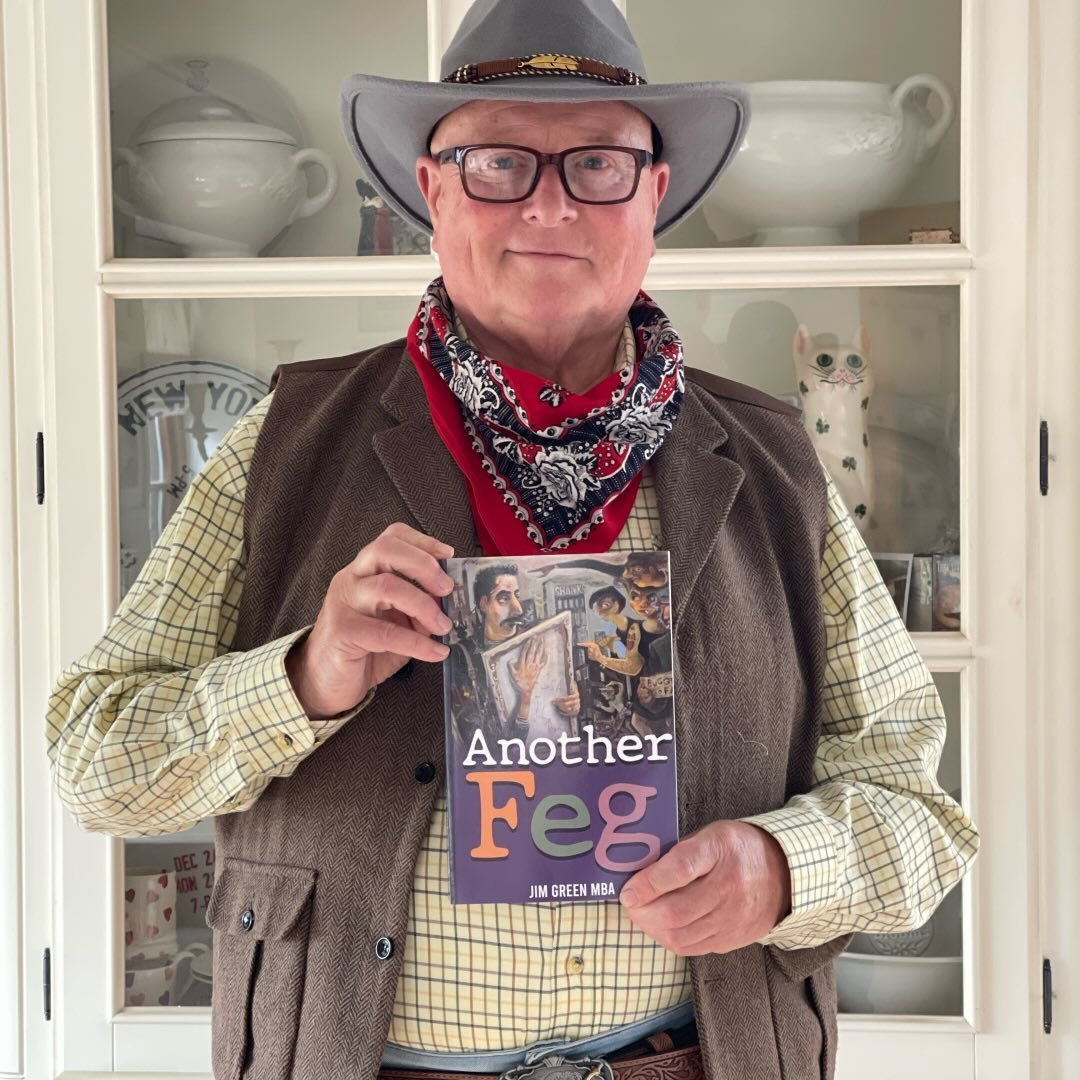
Available now on Amazon.
Shot At. Bankrupt. Offshore. Back Again. Six Miles From Where He Started.
Jim Green grew up in Ferguslie Park when nobody expected anything from it or the people in it. He spent the next seven decades making that expectation look stupid.
Another Feg is the book he nearly did not finish. A memoir that reads with the pace of a thriller and the texture of a world most readers will never have seen, written by the man who lived every page of it.
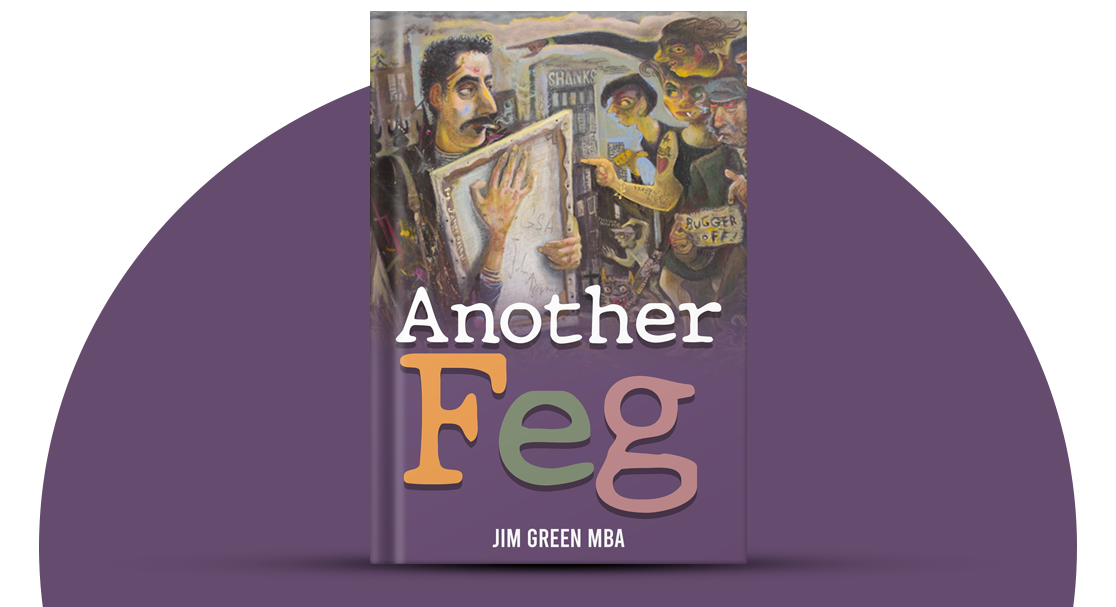
Another Feg by Jim Green is available now on Amazon. For readers who want a story that was actually lived.
“My life has been eventful, challenging, frightening, sad, happy, adventurous and wonderful. I remain without fear and unvanquished.”

— Jim Green, January 2025